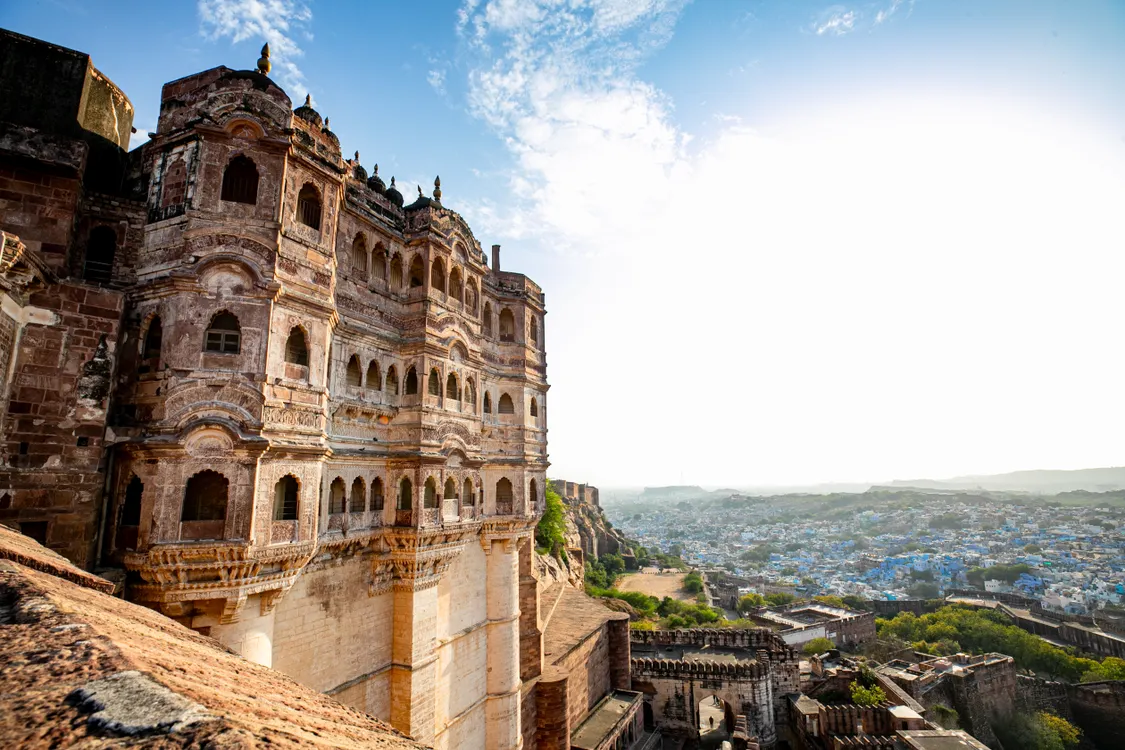
Chokelao Mahal Viewpoint
Early morning for soft shadows
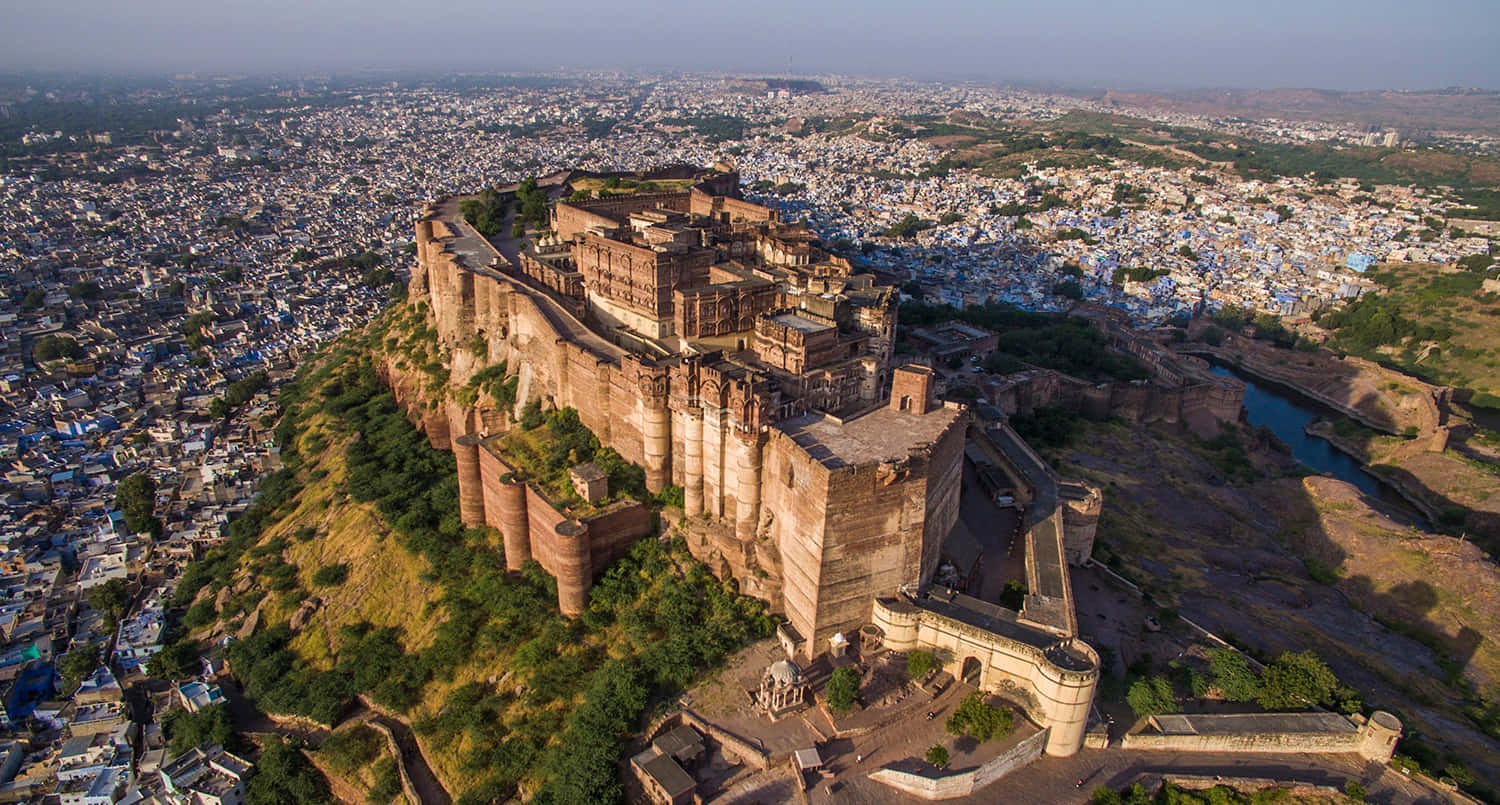
Capture the high-angle perspective of the blue rooftops contrasting with the fort ramparts from this historic terrace.
Mehrangarh Fort rises 122 meters above Jodhpur's old city, placing its ramparts and bastions directly above the densest concentration of blue-painted houses. The fortress walls form a continuous elevated platform encircling the historic quarter, creating unobstructed sight lines across the indigo rooftops that gave the city its nickname.
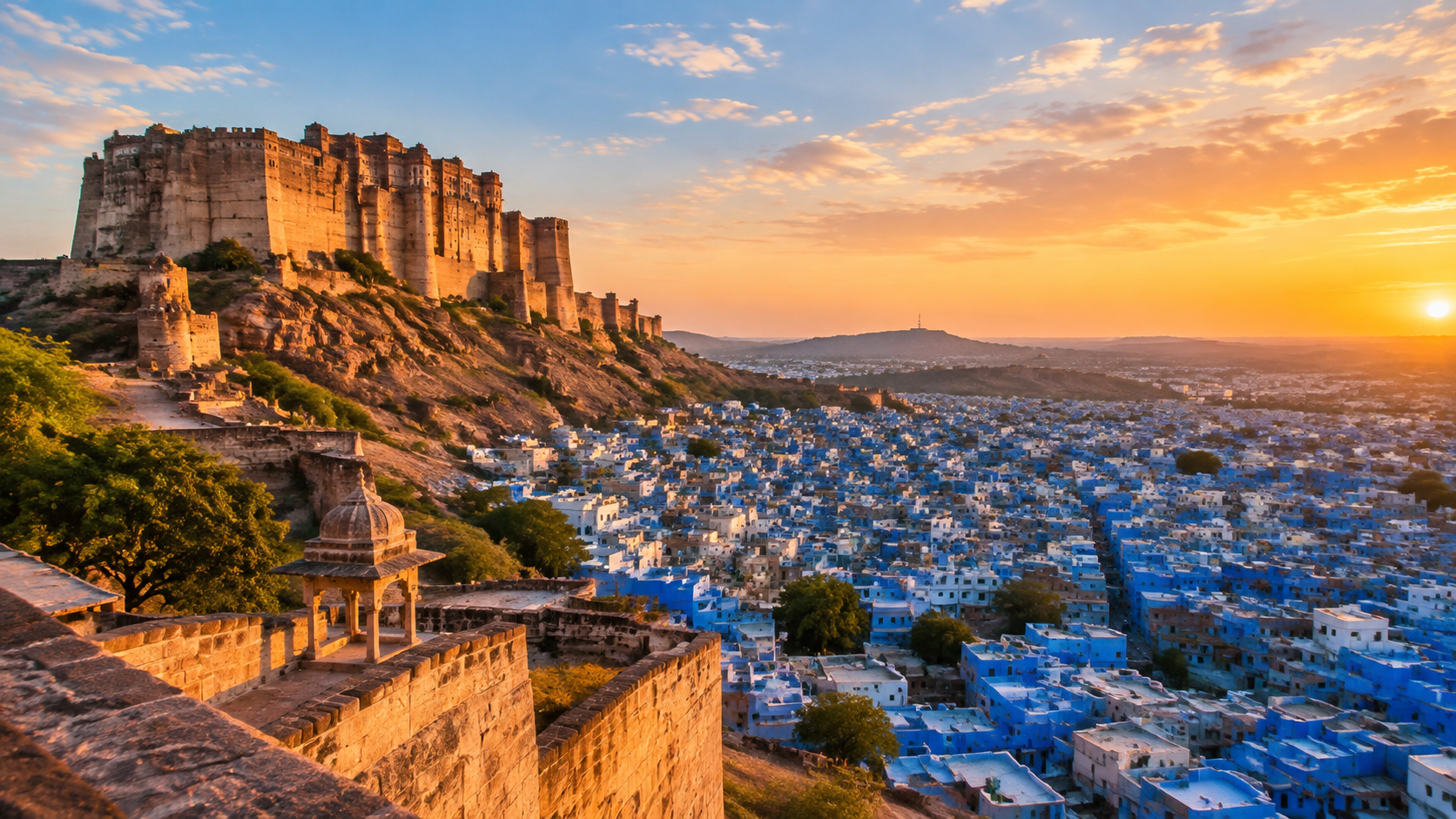
Quick answer
The best jodhpur blue city photo spots lie along Mehrangarh Fort's northern and eastern ramparts, where stone bastions and corner towers provide elevated viewpoints 120 meters above the old city. The Rao Jodha Pol gate area and Fateh Pol terrace offer wide-angle compositions of densely packed blue houses cascading down the hillside. Morning light between 09:00 and 11:00 produces the richest indigo tones, while the 800 INR entrance fee grants access to all rampart walkways and photography platforms throughout the fort's 09:00–17:00 opening window.
Mehrangarh Fort holds more than 500 years of military architecture, but its current role as a photography platform emerged organically from its position on the Bhakurcheeria hill. The rampart circuit was engineered for siege defense, not scenic observation, yet the same elevation that provided strategic advantage now delivers uninterrupted views across 15,000 blue-washed structures in the Navchokiya and Brahmpuri neighborhoods below. The fort's seven gates create natural stopping points along the ascent, each offering a distinct perspective on the old city's geometry. Rao Jodha Pol, the first gate, sits at the transition zone where the blue quarter begins its upward climb toward the fortress walls. Fateh Pol, four gates higher, provides the clearest east-facing composition, with the Jaswant Thada marble cenotaph visible in the mid-ground and the Thar Desert plains stretching to the horizon. The rampart walkway between these two gates remains accessible throughout the fort's daily operating schedule, with the conservation fee covering entry to all elevated platforms and bastions. Photographers working the jodhpur blue city photo spots should note that the indigo pigment responds dramatically to directional light. The copper sulfate-based wash that residents apply to limestone walls reflects shorter wavelengths most intensely during the two hours after sunrise, when oblique rays emphasize texture and depth. By midday, the same walls flatten under vertical sunlight, losing the dimensional quality that defines successful compositions. The Chokelao Garden terrace, added during 18th-century renovations, extends beyond the main rampart line and eliminates foreground obstructions that appear in shots taken from the enclosed bastions. The fort's audio guide, included in the entrance fee, identifies 12 marked viewpoints along the circuit, though photographers typically concentrate on four primary locations where sight lines align with the densest clusters of blue architecture. The western ramparts face away from the painted quarter and toward the modern city expansion, making them less relevant for blue city documentation. Tripod use is permitted on the ramparts but restricted inside museum galleries, and the stone pathways connecting viewpoints include steps and uneven surfaces that require attention when carrying equipment.
“The same elevation that provided strategic advantage now delivers uninterrupted views across 15,000 blue-washed structures in the neighborhoods below.”
Early morning for soft shadows
Capture the high-angle perspective of the blue rooftops contrasting with the fort ramparts from this historic terrace.
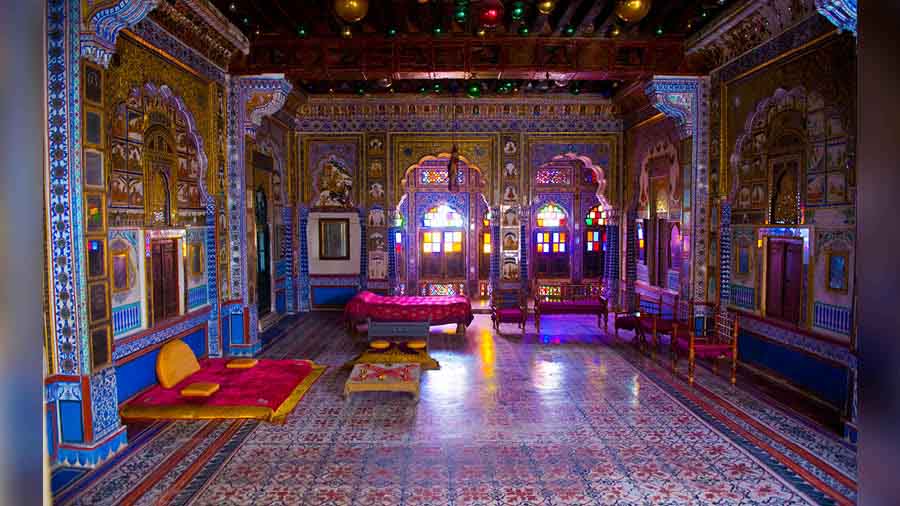
Mid-morning when sun is high
Focus on the intricate gold leaf work and stained glass that filters natural light across the ornate interior.
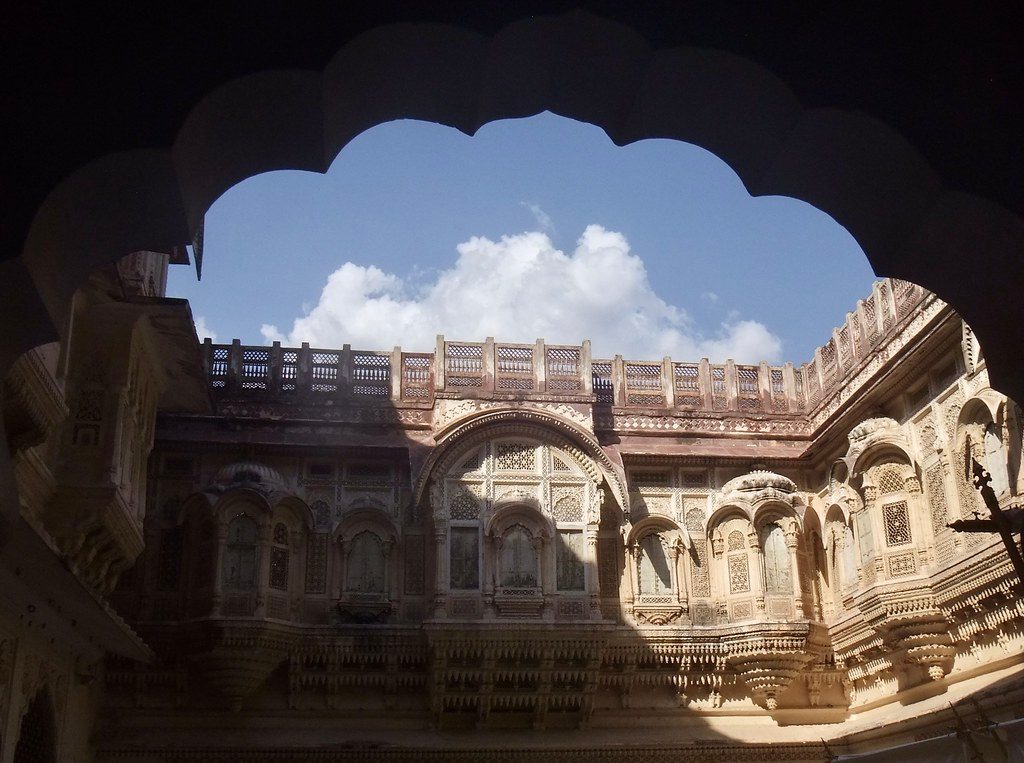
Mid-morning for balanced light
Frame the red sandstone latticework of the screens against the bright blue sky from the ground level.
Morning for clear city views
Photograph the historic Kilkila and Jamami cannons positioned along the wall with the blue city landscape as a backdrop.
The best arrival window is 09:00–11:00 to optimize photography lighting while avoiding mid-day heat and large afternoon crowds. Early morning light provides clear views of the blue architecture against the Jodhpur sky.
Cool, dry; 10°C to 25°C
Mild weather allows for comfortable exploration of the fort grounds. Photographers benefit from soft, directional light during these months.
Hot, dry; 30°C to 45°C
High temperatures require early arrival to capture images before midday heat peaks. Mid-day haze can impact long-distance city views.
Humid, occasional rain; 25°C to 35°C
Overcast skies can provide even lighting for architecture photography. Greenery around the fort contrast with the blue houses.
—
Best for uninterrupted access to primary viewpoints within the fort. Morning light emphasizes the distinct pigment of the blue city.
Verdict: Plan your visit for weekday mornings during the cooler months of November to February to secure the most favorable conditions for photography.
Mehrangarh Fort remains open to visitors daily throughout the week. Planning your arrival within these operational hours ensures adequate time to access various photo spots within the complex.
Mehrangarh Fort is located on a steep hill rising above the historic center of Jodhpur. The most accessible approach is via the main road leading to the fort's primary gate, Jayapol.
Direct drive to the fort parking area from Jodhpur city center
Ascent via the winding path from Chandpol gate
Route via Fort Road to the designated parking lot
For the best experience, aim to arrive during the 09:00–11:00 window to avoid mid-day heat and large afternoon crowds. Taxis can drop passengers directly at the fort entrance, whereas walking from the old city involves a steep uphill climb.
Everything you need to know about jodhpur blue city photo spots
The ramparts of Mehrangarh Fort provide panoramic vistas of the blue-painted houses below, serving as some of the most iconic jodhpur blue city photo spots. Other notable areas include the intricate sandstone carvings within the palace courtyards and the museum collection windows. We recommend arriving during the designated morning window of 09:00–11:00 to capture the best natural light while avoiding the heat. This timeframe also helps you bypass the larger afternoon crowds often found at popular Jodhpur landmarks. Visitors are required to pay an entrance fee of 800 INR, which includes an audio guide to help navigate the historical architecture. This conservation fee is collected per person at the main entrance. You are generally permitted to use personal cameras to capture your jodhpur blue city photo spots throughout the accessible areas of the complex. Please note that specific interior museum galleries may have restrictions on flash photography to protect historical artifacts. The fort is located at P.B # 165, The Fort, Jodhpur 342006. Many visitors utilize local auto-rickshaws or pre-arranged transport to navigate the steep ascent to the entrance. Local guides offer comprehensive expertise, and you can explore organized walking tours that highlight the blue city skyline and historical context. These experiences often provide deeper insight into the urban fabric beyond just the primary observation points. The complex is generally welcoming for families, though the terrain involves stairs and stone pathways that require comfortable footwear. Keeping a close watch on children is essential due to the high ramparts and open drop-offs near the perimeter walls.