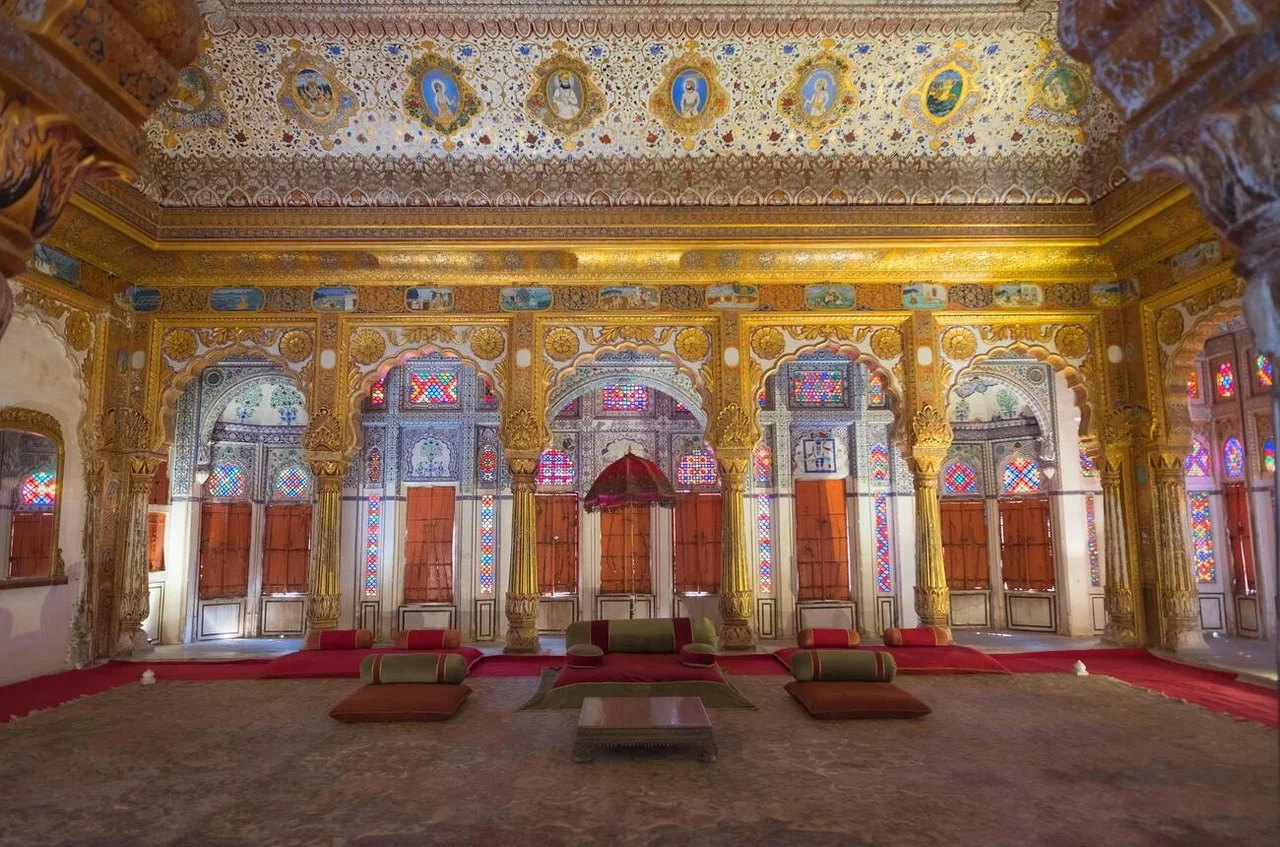
Phool Mahal
Known as the Palace of Flowers, this room features elaborate gold filigree work and stained glass windows. It served as the private chamber for the Maharaja.
Look up to see the intricate gold leaf ceiling carvings.

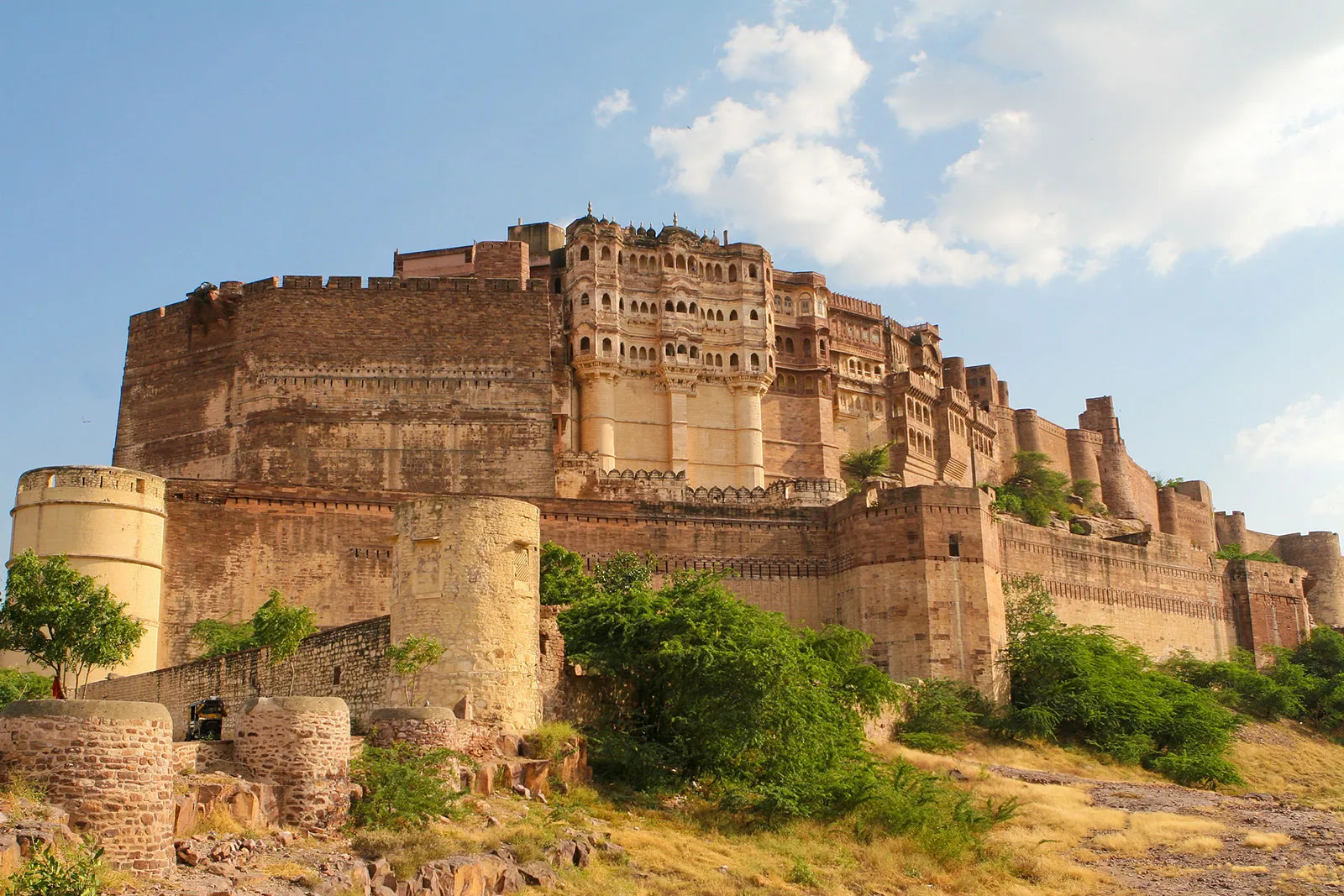
Mehrangarh Fort rises 122 meters above Jodhpur's indigo rooftops, a red sandstone citadel that has dominated the Thar Desert horizon since 1459. This guide maps the logistics — when the fort opens, what admission includes, and how to time your visit to the blue city's most commanding landmark.
Quick answer
Mehrangarh Fort is open daily from 09:00 to 17:00. International visitor admission costs 800 INR and includes an audio guide narrated by the Jodhpur royal family. Arrive between 09:00 and 11:00 for the best natural light on the ramparts and manageable crowds before the afternoon peak, especially during the October-to-March high season when tour groups concentrate after midday.
Mehrangarh Fort is one of India's largest hilltop forts, its outer walls stretching more than a kilometer and rising in places to 36 meters. Built by Rao Jodha after he relocated his capital from Mandore in 1459, the citadel expanded over five centuries as successive maharajas added palaces, courtyards, and seven fortified gates. The name translates to "Fort of the Sun," a reference to the Rathore clan's claim of descent from the sun god Surya. A blue city tour guide jodhpur itinerary typically places Mehrangarh at the center of a walking route that begins in the old-city lanes below and ascends via the zigzagging approach road. The fort's elevation offers unobstructed views across Jodhpur's blue-washed Brahmin quarter, where indigo-painted houses form a continuous mosaic interrupted only by the pale domes of temples and the occasional terracotta rooftop. The contrast between the crimson sandstone ramparts and the cobalt cityscape is sharpest in morning light, when shadows are still long and the desert haze has not yet softened the palette. Inside the fort, the audio guide leads through a sequence of courtyards and palace halls that now house the Mehrangarh Museum. The collection includes miniature paintings from the Marwar school, palanquins inlaid with ivory and silver, royal cradles, and weapons that trace five centuries of Rajput martial culture. The Phool Mahal, or Flower Palace, retains its original gold-leaf ceiling and stained-glass windows. The Moti Mahal, built in the 1580s, functioned as the throne room and still displays the royal seat from which the maharajas held court. The fort's layout is not linear. Visitors move through a series of gated passages — Jayapol, Fatehpol, and others — each commemorating a military victory or royal event. The final ascent to the museum entrance passes cannonball scars on the gates, remnants of siege attempts that never succeeded. The thickness of the walls and the steepness of the approach made Mehrangarh nearly impregnable, a reputation that held until Jodhpur acceded to the Indian Union in 1949. The site remains under the management of the Mehrangarh Museum Trust, established by the current head of the Marwar royal family, and the audio guide is voiced by members of that lineage, giving the narrative a genealogical continuity that few Indian heritage sites maintain.
“The fort's elevation offers unobstructed views across Jodhpur's blue-washed Brahmin quarter, where indigo-painted houses form a continuous mosaic.”
Mehrangarh Fort maintains a consistent daily schedule throughout the week to accommodate visitors. The site is open for access every day.
Mehrangarh Fort is located at The Fort, Sodagaran Mohalla, Jodhpur, Rajasthan 342006, India. The most direct approach is via the city center, navigating the winding streets toward the northern cliffside where the fort overlooks the Blue City.
Direct drive via Fort Road and Mehrangarh Road
Ascent from the Old City via the steep pedestrian paths
Parking available near the main gate entrance
Arriving by taxi is recommended for those navigating the complex narrow lanes of the Old City. Use the official main gate entrance to reach the primary visitor facilities efficiently.
Mehrangarh Fort houses a collection of palaces and galleries that reflect the architectural heritage of the Rathore dynasty. These spaces contain artifacts and design elements that characterize the fort's interior layout.
Known as the Palace of Flowers, this room features elaborate gold filigree work and stained glass windows. It served as the private chamber for the Maharaja.
Look up to see the intricate gold leaf ceiling carvings.
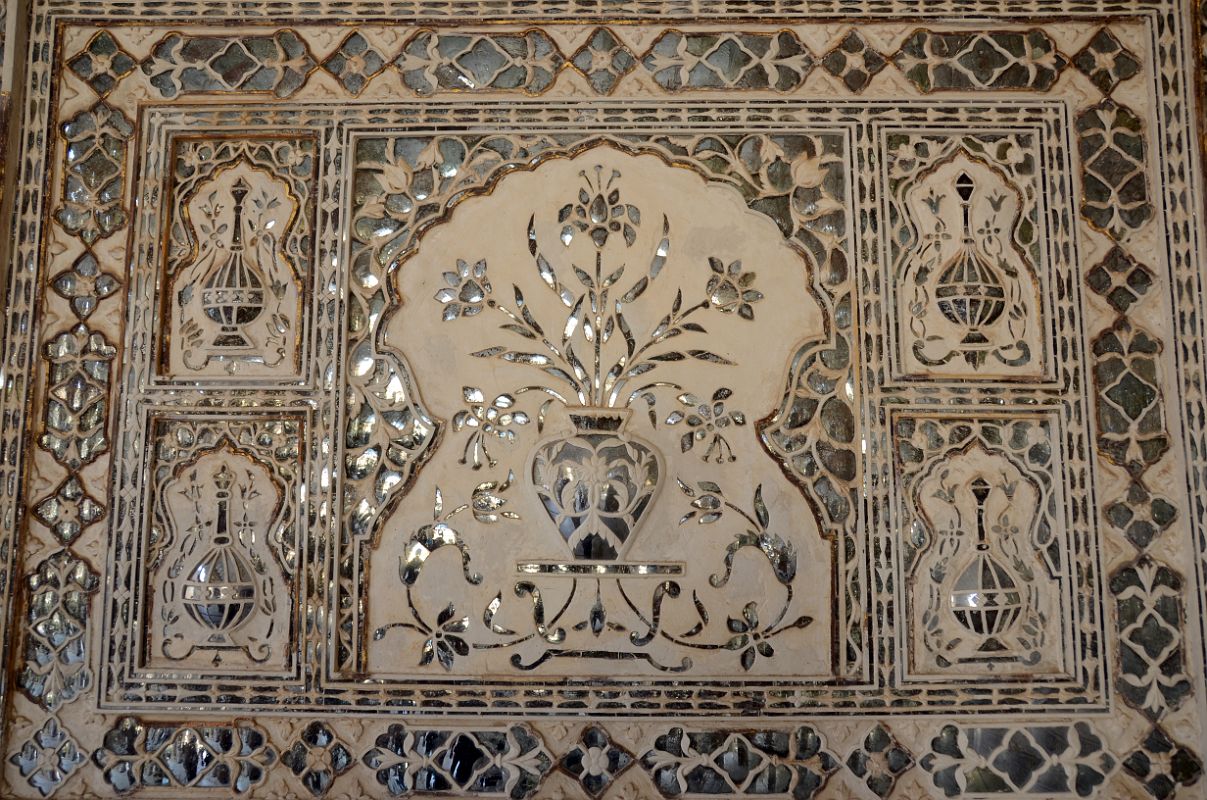
This chamber is decorated with thousands of small mirror pieces set into plaster work. The reflective surfaces create a distinct play of light throughout the room.
Step into the center to view the symmetrical mirror reflections.
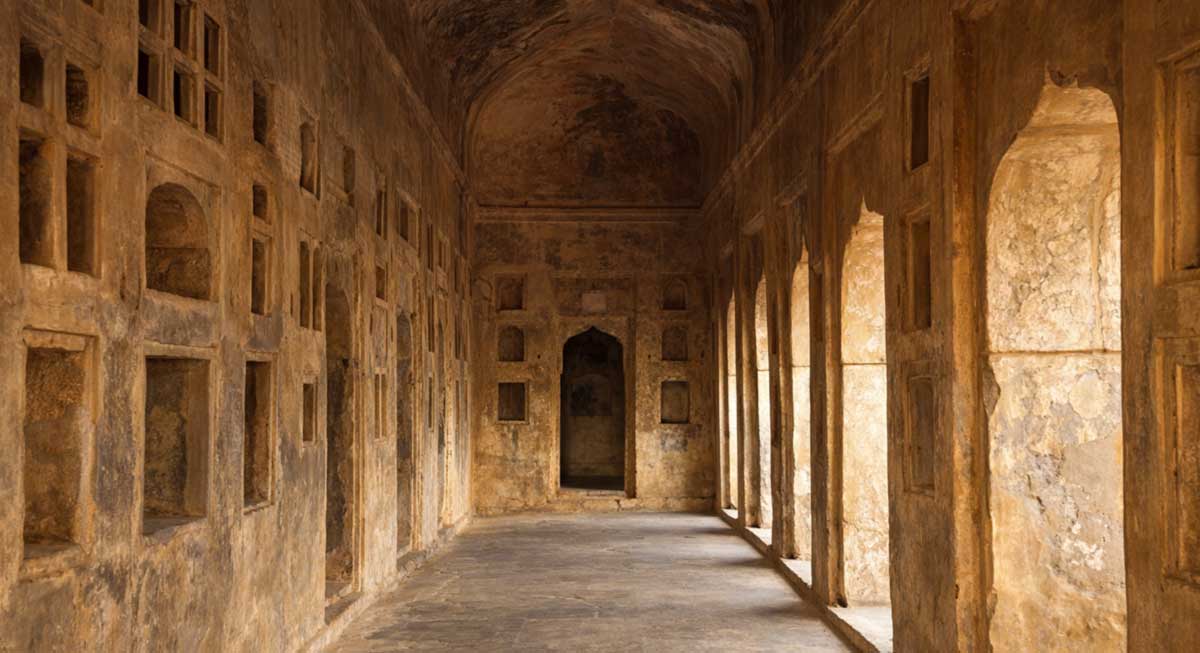
The Pearl Palace contains walls finished with a lime plaster mix that includes crushed seashells for a pearlescent sheen. It served as a hall of audience for the ruler.
Observe the wall textures from the side for light reflection.
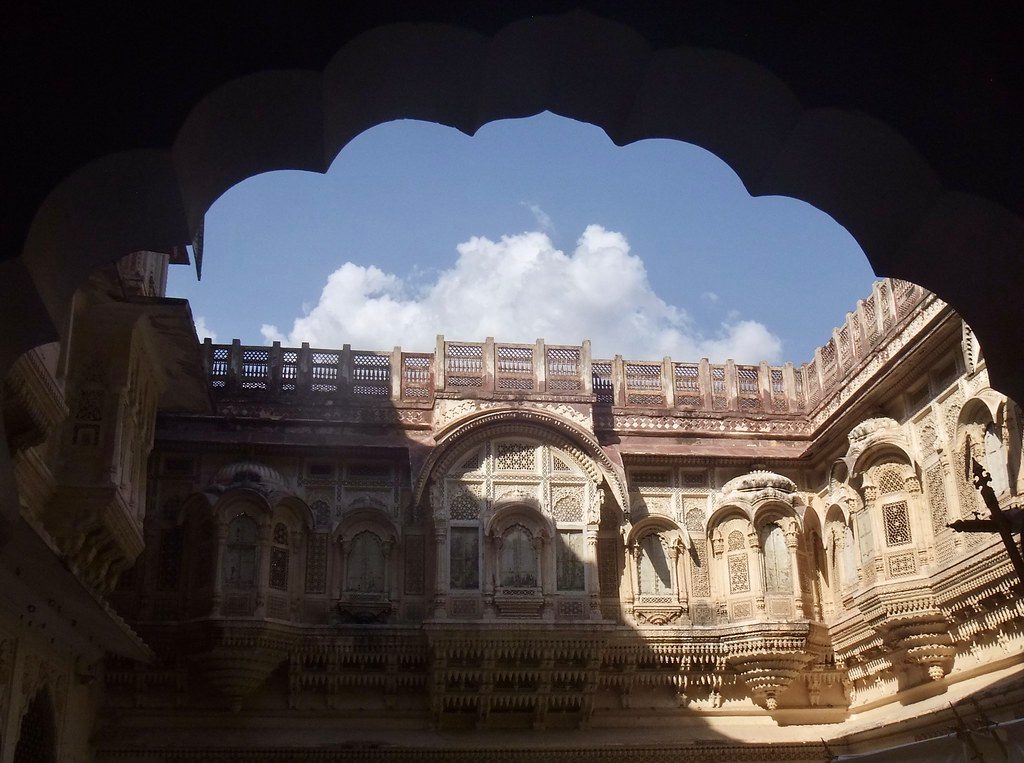
This area consists of the women’s quarters featuring ornate sandstone carvings on the balconies and screens. It remains separated from the main public courtyards.
Focus on the stone lattice work on the upper levels.
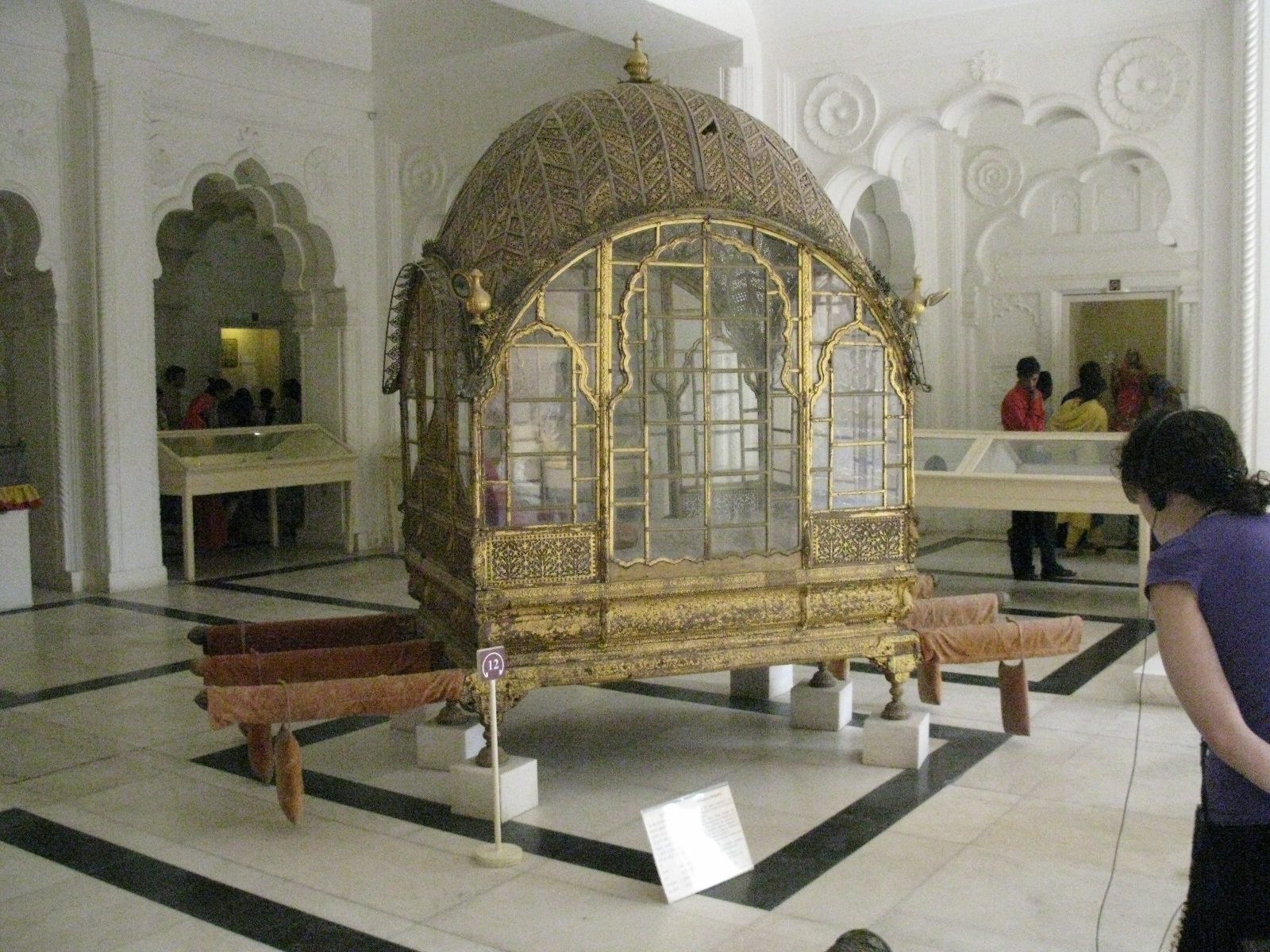
This gallery holds a diverse collection of royal palanquins, weaponry, and paintings from the Jodhpur school. The exhibits document the material culture of the region.
Walk the perimeter to view the royal palanquin details.
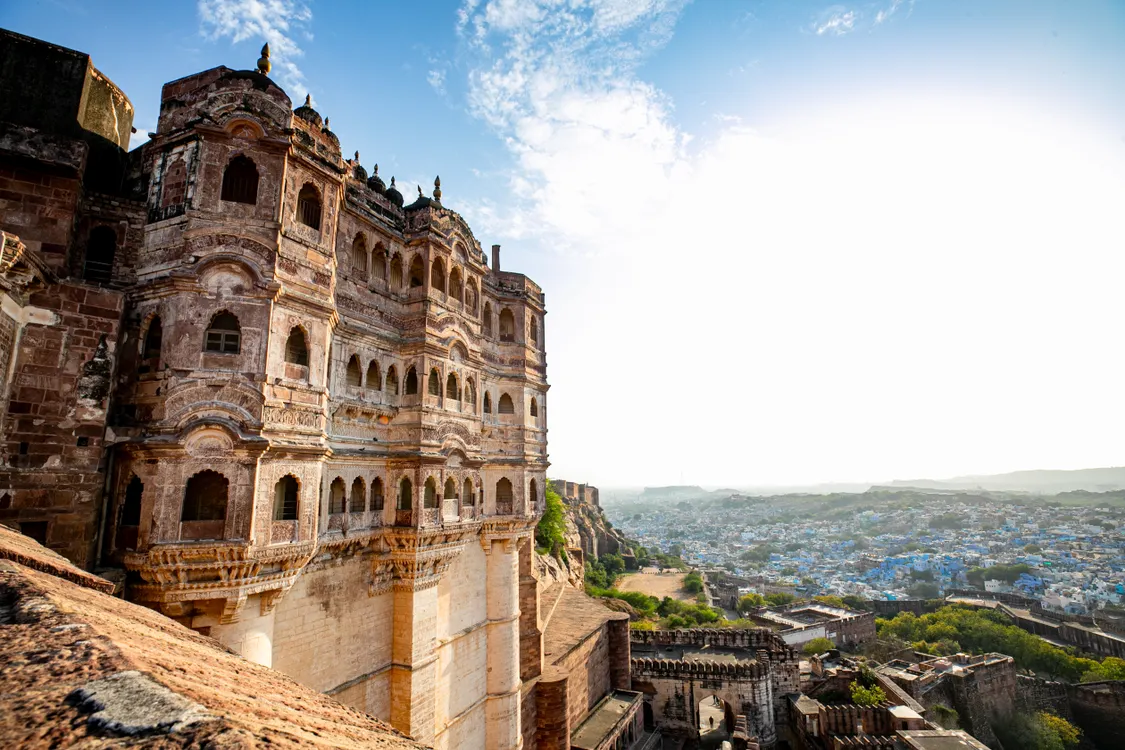
Morning light
This balcony offers a direct downward view of the blue-painted houses in the old city.
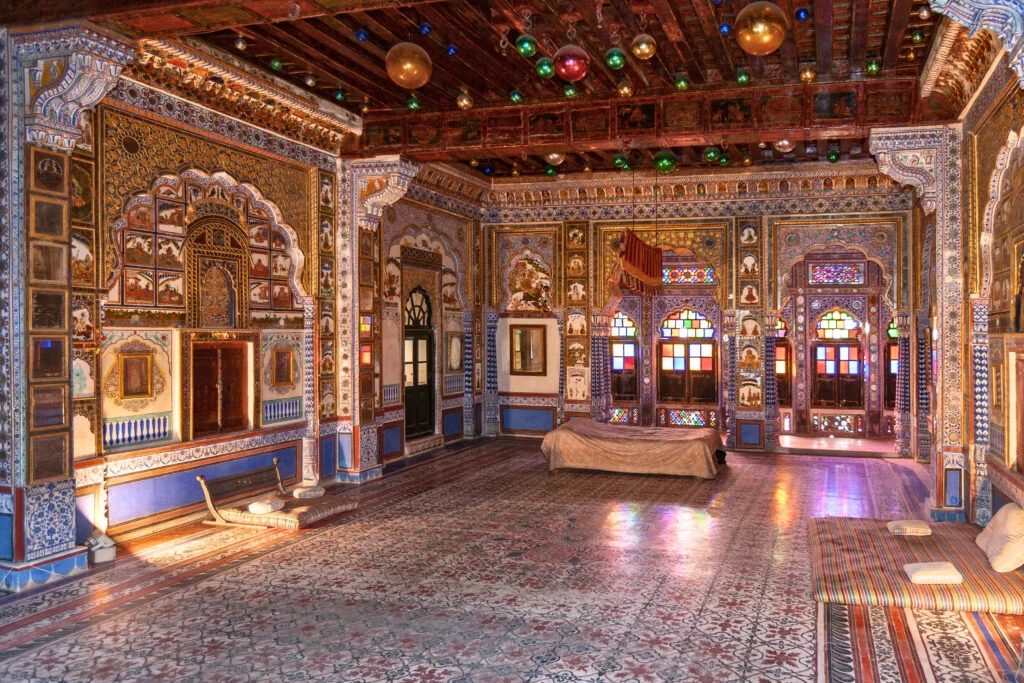
Mid-day when sun is bright
The ornate stained glass windows cast colorful patterns across the intricate gold-leaf walls.
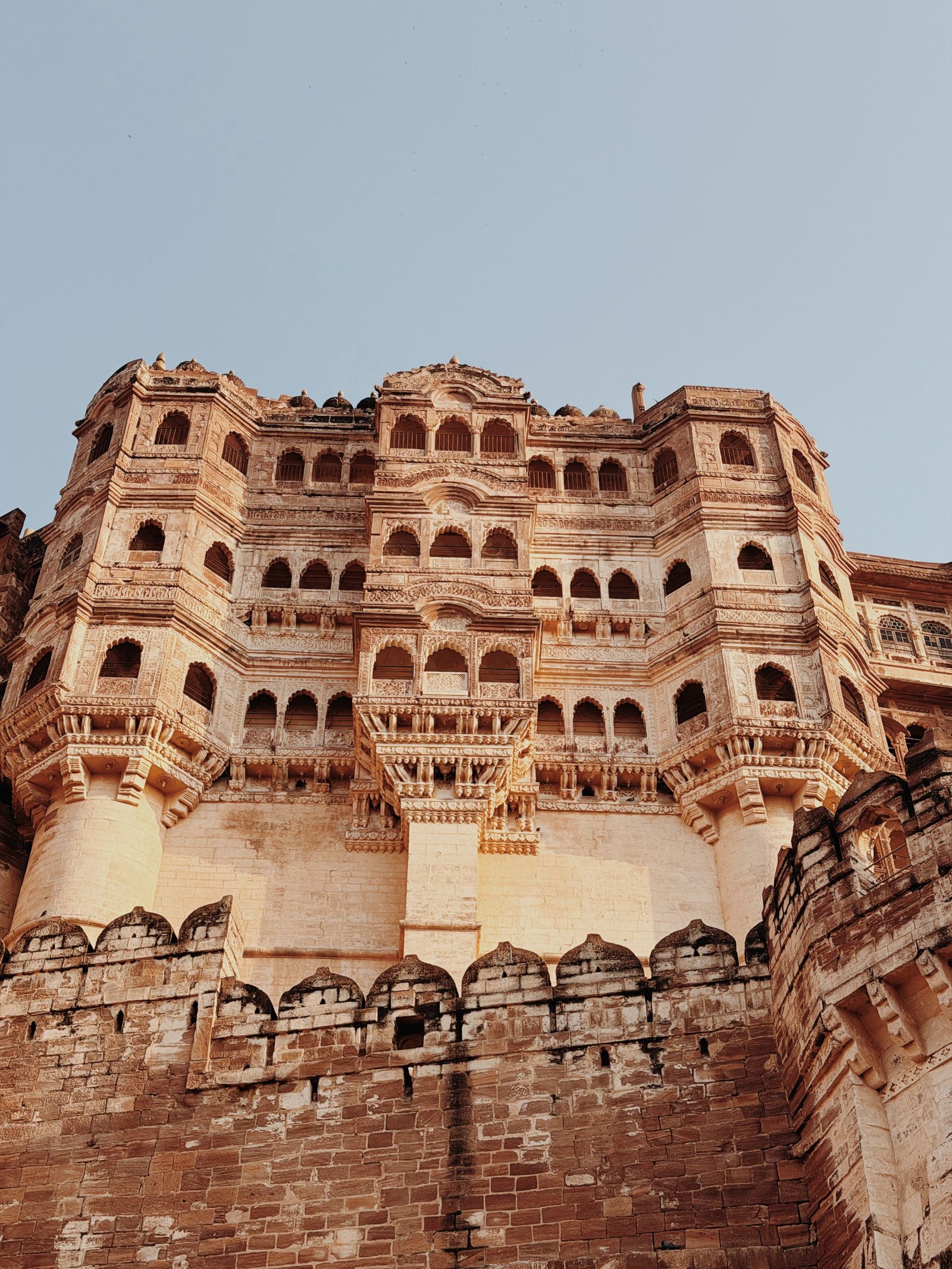
Early morning
Intricate stone carvings frame the view of the city skyline through traditional Jharokha windows.
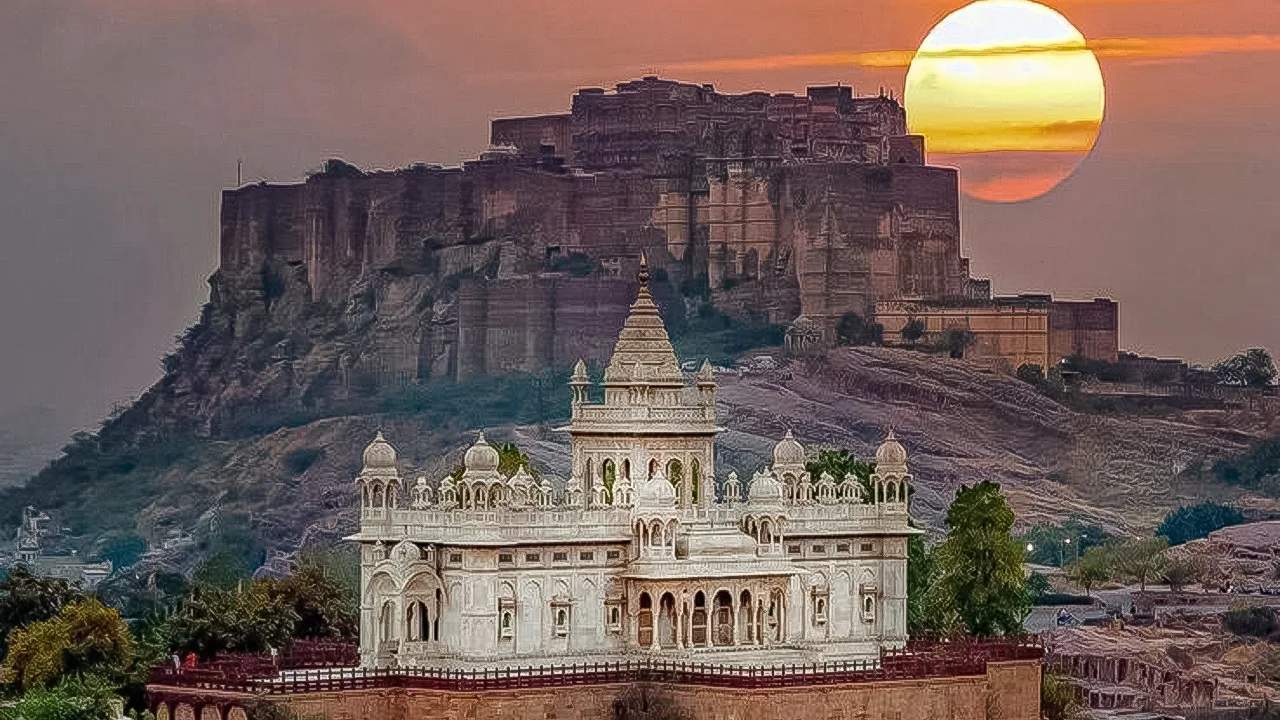
Late afternoon
The white marble cenotaph provides a contrasting foreground against the towering fort walls.
Everything you need to know about blue city tour guide jodhpur
You can locate a professional blue city tour guide jodhpur through our official booking portal to ensure you have a certified expert. Many visitors find that pre-booking helps streamline their arrival and navigation of the vast complex.
While exploration is possible independently, a blue city tour guide jodhpur provides historical context and access to stories behind the sandstone architecture. They help visitors navigate the expansive ramparts and palace courtyards efficiently.
A traditional heritage walk typically covers the fort's museum, the Phool Mahal, and the Sheesh Mahal, alongside panoramic views of the city. These tours often bridge the gap between architectural history and the local culture of Rajasthan landmarks.
The entrance fee is 800 INR for international visitors, which includes an audio guide. Please check our pricing section for further details regarding currency and inclusions.
The best arrival window is 09:00–11:00 to enjoy clear light and manageable crowds before the afternoon peak. Arriving during this time allows you to explore the galleries and ramparts in cooler, quieter conditions.
Yes, a knowledgeable blue city tour guide jodhpur can provide insights into why the houses are painted blue and how the color protects the buildings from heat. They connect the history of the fort with the urban layout below.
Most visitors spend between two to four hours exploring the museum collections and the various courtyards. This duration allows enough time to walk the perimeter and observe the intricate craftsmanship of the carvings.
Group visits benefit from a structured itinerary provided by a specialized Jodhpur historical guide. Having a professional lead ensures that larger groups maintain a pace that accommodates everyone while covering all major sites.